
Italian
hair extensions
Italian hair extensions are a bonded method built on hot keratin. The stylist joins a donor strand to your own with a keratin bond, melted with heated pliers at around 180 °C. The name comes from the origin of the keratin: the Italian high-melting formula holds its shape far longer than cheap substitutes and does not crumble during wear.

How the procedure works
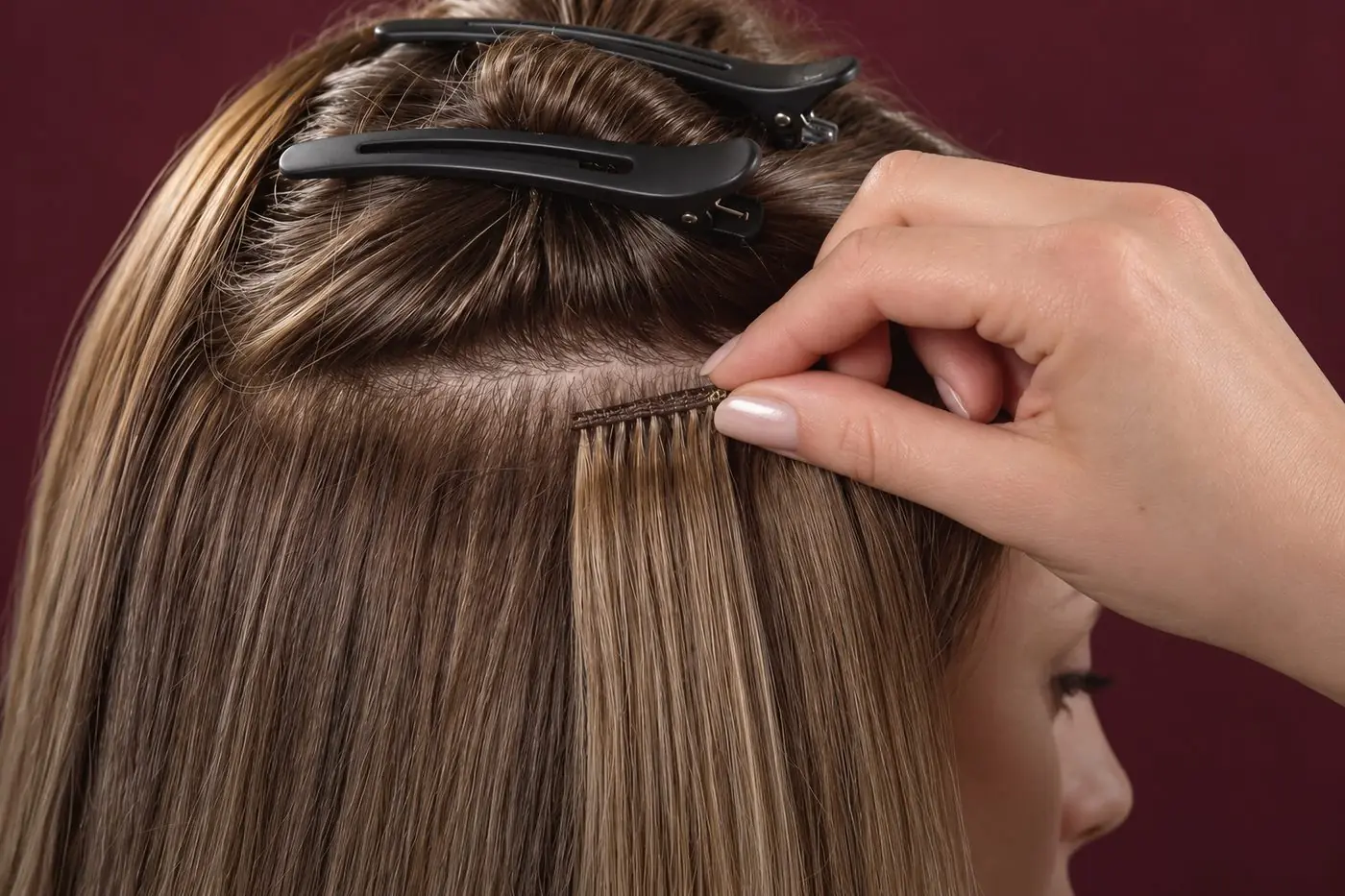
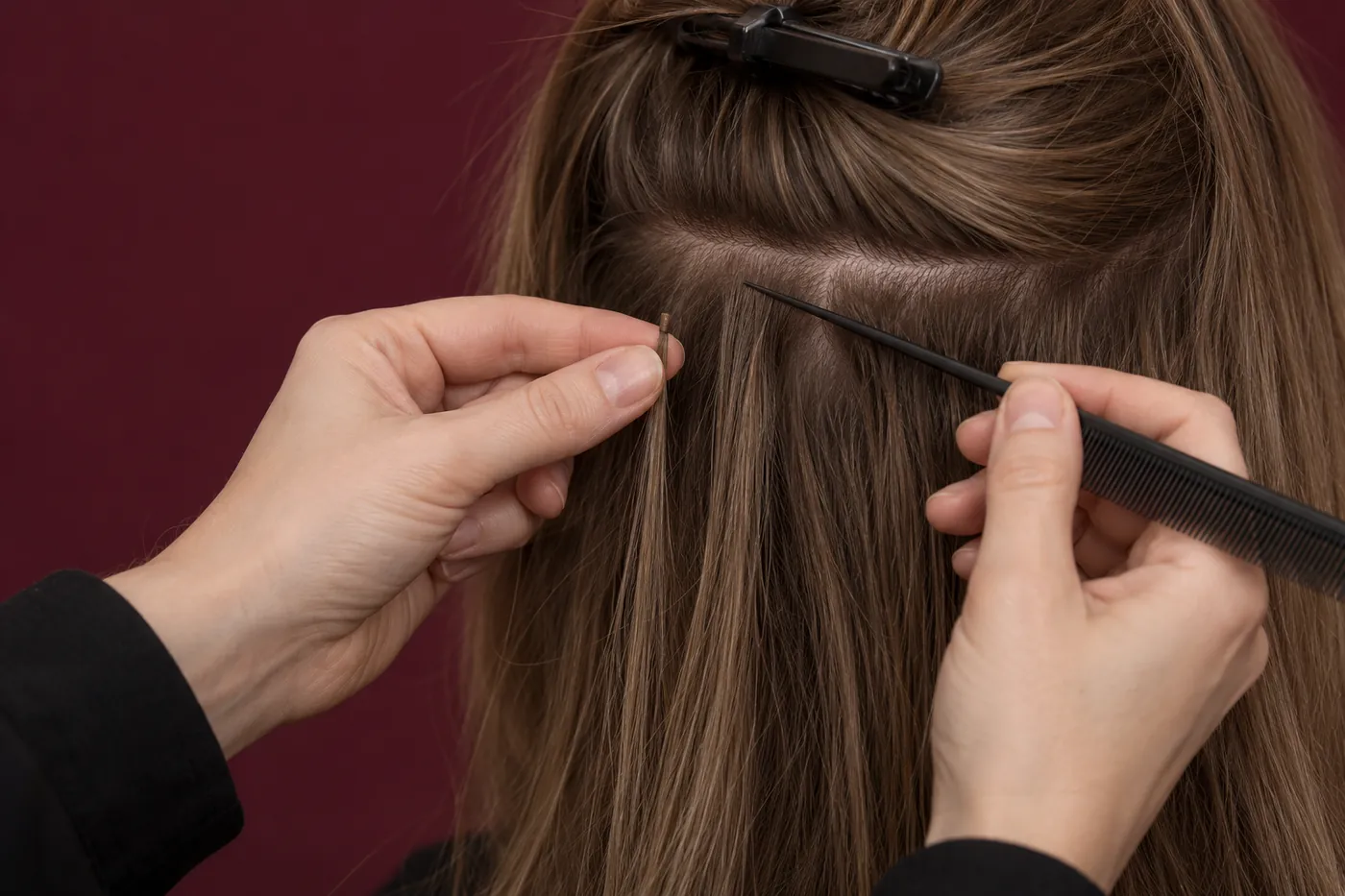
First the donor hair is matched by texture, shade and weight. The hair is then washed and dried without conditioner, which would leave a film and weaken the bond. The stylist separates a 2–3 mm section, places the donor strand against it and melts the bond, shaping it between the fingers into a thin flat droplet. A full head takes 400 to 600 bonds and three to five hours of work.
How it differs from other methods
Unlike tape-ins, the attachment is point-by-point rather than a strip: bonds are spread across the head and never form a visible line in an updo. Unlike micro-bonding, the bond is larger, which changes the load on the root. And unlike cold methods, set keratin stays flexible and does not scratch the scalp the way metal beads do.
Who it suits and who it does not
The method needs at least 10–15 cm of your own length; any shorter and the bond shows. It works well on normal to thick hair. On badly damaged hair — after a perm or aggressive bleaching — extensions are postponed until it recovers, since weakened hair cannot carry the extra weight and starts snapping at the root. It also sits badly with frequent sauna visits: constant steam softens keratin.
Common questions
Does Italian bonding damage your own hair?
With a correctly calculated weight and timely corrections, no. Damage comes from two things: hanging too many grams on fine hair, and leaving bonds in past their term until they mat at the root. Both are about the stylist’s judgement, not the technology.
Can you colour hair with bonds in?
Yes, but only along the length and keeping clear of the bonds. Dye and bleach dissolve keratin, so root colour is done before the extensions, not after. Toning the lengths is safe.
How many bonds does a full head need?
Between 400 and 600, depending on density and the goal. Adding thickness without changing length can take 200–250; substantial lengthening on fine hair needs the upper end of the range.
Read next
questions?